Theia Metals

About Peptides

Learn About Peptides

Introduction to Peptides

Peptides are short chains of amino acids—smaller versions of proteins—that derive their unique properties from the type and order of amino acids used. With 20 natural amino acids, a 10-unit peptide can have over 10 billion possible sequences, creating immense chemical and structural diversity.
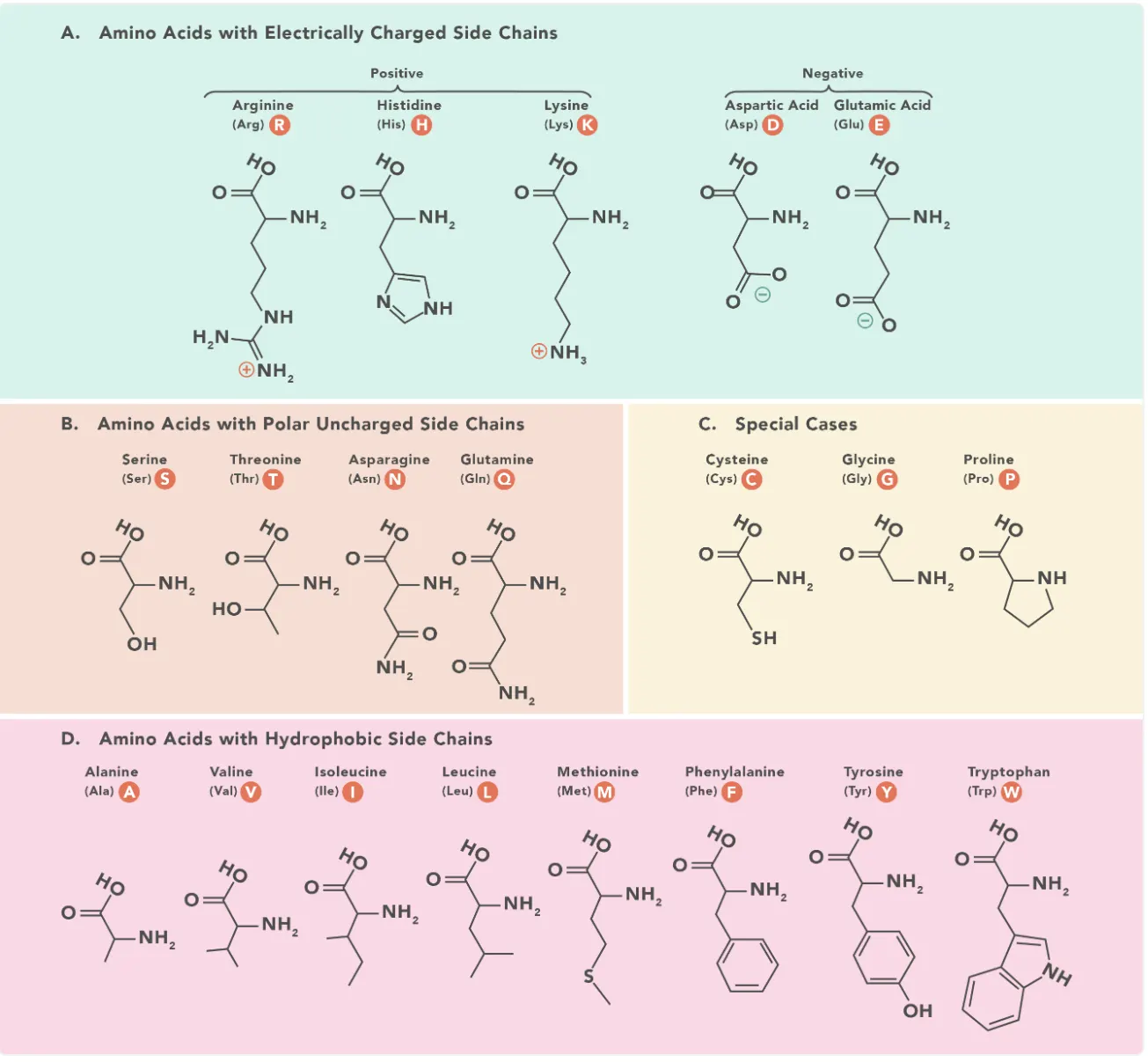
Diversity of Amino Acid Structures - The chemical structures of the 20 natural amino acids that make up proteins and peptides. Credit: Technology Networks
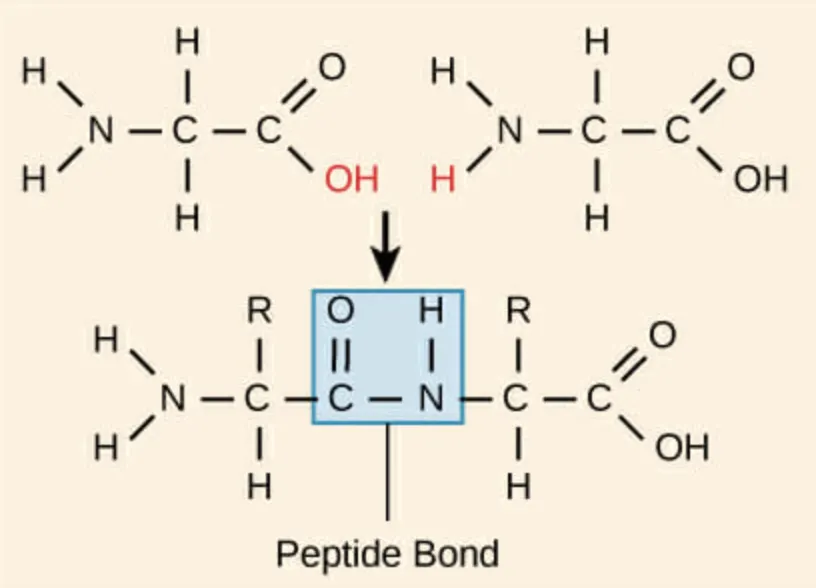
Amino Acids are Joined into a Peptide via Peptide Bonds - To make a peptide, individual amino acids are joined together in living cells or in chemical synthesis, by a covalent bond called a peptide bond. Two amino acids come together via a dehydration reaction where 2 hydrogen and 1 oxygen are removed from the two amino acids. Hence, a peptide of 10 amino acids would have 9 peptide bonds, one amino terminus and one carboxy terminus. Credit: biologydictionary.net
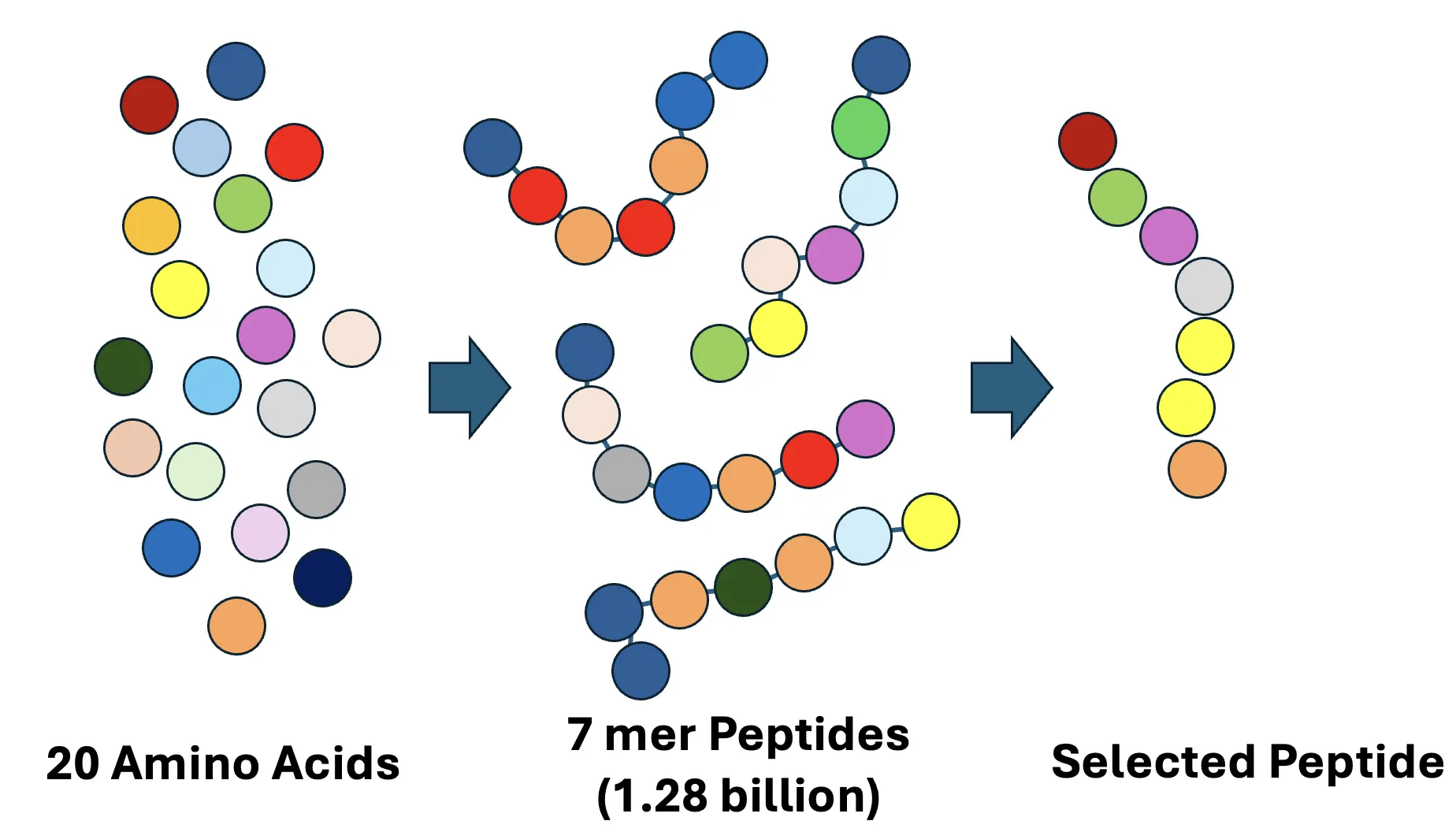
Amino Acid Diversity in Peptides - The 20 natural amino acids can be expressed as 7 amino acid long peptides via phage display technology, for example, representing tremendous structural diversity in a “library”. When the peptide library is screened for binding and selected over repeated cycles for binding to target metal, we identify 10s of peptides that bind selectively, one example shown here.

At Theia MetalsTM, we exploit this diversity using phage display technology to generate large peptide libraries (6–18 amino acids long). From billions of sequences, we select only those that bind strongly and selectively to a specific mineral or metal target.

These peptides interact with targets through precise 3D shape and surface chemistry, not covalent bonds—much like peptide drugs in modern medicine bind to biological targets. This level of molecular selectivity has never before been applied to metals separations and recovery.

By transferring this biotechnology into mineral and metals processing, we unlock a powerful new tool for highly selective, efficient, and environmentally friendly metals separation.